



Any person, man or woman, between 18 and 65 years old and with a recognized mental health diagnosis, can apply for a place in this resource, either on their own initiative, by contacting us, or by delegating this task to the basic technician. teams with which they will have a relationship through their Social Center, Health Center, Mental Health Unit or any other socio-health facility (CEEM, Day Hospital, etc.) involved in their process.
Before joining the programme, candidates are interviewed to determine their suitability and need for the position offered. The objective is to get to know each other and be willing to resolve doubts and clarifications that allow, on the one hand, the candidate to know the day-to-day organisation system, the rules established for coexistence, the requirements and rights, and, on the other hand, to let the technical team know what are the expectations and motivations that lead the candidate to consider their incorporation into the resource desirable.
The main key to determining whether to join the resource is always the candidate and the fit of his or her expectations and motivation. In all cases, it must be a decision made with complete freedom and driven by one’s own desire. Based on this premise, other issues that we value and that define the incorporation profile are those defined through the following characteristics:
– Aimed at men and women between 18 and 65 years old with a mental health diagnosis.
– People undergoing psychiatric treatment and monitoring whose psychopathological situation is stable, maintaining regular contact with their reference Mental Health Service.
– Men and women with temporary housing needs in social resources (long-term for cases seeking community reintegration, or as a temporary stay for cases of family respite) for training in basic activities of daily living and instrumental activities for execution in the community environment.
– Present a minimum level of personal and social autonomy that allows them to accept the demands of living and coexisting in the apartment.
– Not present aggressive or dangerous behaviour patterns for themselves or others. Nor serious problems with drug addiction or alcoholism (previous treatment being necessary).
– Have minimum financial resources that allow you to make monthly payments for the service received, and meet personal expenses.
– Being in need of accommodation and support and not having, due to absence, inadequacy or impossibility, a family environment that provides the necessary support to live with an acceptable quality of life.
Accept the linking of your process with participation in external resources, whether in the specific area of mental health (CRIS, CD) and/or in a normalized community environment, as determined by therapeutic convenience at each moment of the process.
You can apply for a place in the resource directly or you may be assigned one by right through recognition of the degree of dependency. In any case, your situation will be studied in the Department of Functional Diversity, in the section for people with a mental health diagnosis, which will facilitate the search for alternatives to your request. At El Arrebol, an Evaluation Commission with the Institution is not required as a condition to endorse the incorporation of a user, however, coordination between both devices is common to share the occupancy status of the places, and thus facilitate their availability when they become vacant.
Once the situation of the candidates applying for the vacant post has been assessed, an interview is held with the educational team, in order to meet them personally, exchange impressions, resolve doubts, etc. Two issues are essential at this point. The initial stage of the process:
All you need to do is meet these requirements. For all other challenges that arise in the process, you can count on El Arrebol professionals to deal with them in the best possible way.
Every user who joins the resource does so because they freely choose this option. It is very important to have motivation to test oneself and face the challenges inherent in living with a group of new people with whom you share similar life circumstances.
It is usually estimated that the average time needed for a user to take advantage of the resource and achieve the final objective of being discharged and living in circumstances of greater independence and autonomy is between two and a half and three years. In practice, it is common for the time to be relative to the needs of each person, and there may be cases in which people do not need more than a year to successfully put into practice the skills necessary to face the activities of daily life, while other people may require more time than expected because their need for support is greater. In any case, going through the resource is always an enlightening experience, either because the obstacles that prevented them from taking care of themselves with solvency are overcome, or because accepting the existence of these obstacles, the objective changes and focuses its efforts on defining the support that must be provided to enable a life that, despite the need for care interventions, continues to gain independence with respect to the initial situation when entering the resource.
It is also important to have the financial resources to cover the monthly fee. In 2024, the price is €2,350 (VAT included) and is usually associated with a service-related benefit (PVS). To obtain this benefit, it is necessary to have been recognised as Dependent (at least Grade 1), which will allow the majority of the fee to be covered, which must be supplemented by contributions from one’s own income, if it is not fully covered.
The process in “el Arrebol” concludes with the granting of discharge or discharge from the resource. A person who leaves the program is considered discharged for having met the objectives set from the resource, when he or she has acquired sufficient autonomy to be able to function and manage a home normally or return to the family home. Therefore, he or she is considered discharged, on the one hand, when these objectives have been met, and discharged for partial fulfillment of objectives, on the other hand, when a modification occurs during the course of the therapeutic process of the initial incorporation approaches, achieving objectives not initially foreseen or because the process is suspended when the user leaves. A person who leaves the program is considered discharged because the expected objectives of acquiring autonomy have not been achieved, or because the user himself or herself has left it voluntarily or involuntarily.
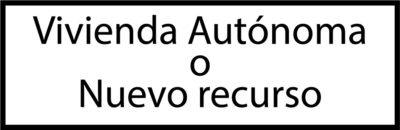
The design of the exit process for those users who have managed to meet the objectives of integrating independent living habits during their stay is developed following an intervention model that facilitates the progressive transition from the resource to independent housing with the aim of preparing the user for the new circumstances, allowing a progressive adaptation, evaluating the new needs and difficulties that may arise during the process and allowing the transition of technical references since, although the users become independent from the resource, they have the right to continue receiving lifelong monitoring by the technical teams of the Mental Health Units.
Cualquier persona, hombre o mujer, de entre 18 y 65 años y con un diagnóstico de salud mental reconocido, puede solicitar una plaza en este recurso, ya sea por iniciativa propia, contactando directamente con nosotros, o delegando esta gestión en el técnico correspondiente. La solicitud se realizará en coordinación con los equipos profesionales con los que la persona mantiene relación, a través de su Centro Social, Centro de Salud, Unidad de Salud Mental u otros centros sociosanitarios implicados en su proceso, como CEEM, Hospital de Día, entre otros.
El primer paso cuando queda una plaza libre y se ha recibido la solicitud de un candidato/a, es valorar su situación junto a la Dirección Territorial de Servicios Sociales, Igualdad y Vivienda (técnicos sección personas con discapacidad), en el área específica de personas con diagnóstico de salud mental. Esto permite una adecuada orientación ya que influye mucho la concesión de la Prestación Vinculada al Servicio de Garantía (PVS-G).
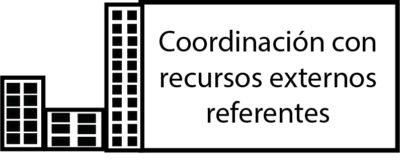
En este proceso, también resulta fundamental la coordinación con los recursos externos de referencia, tanto a nivel institucional como comunitario, con el fin de compartir información relevante y garantizar que este recurso es la respuesta adecuada a las necesidades detectadas.
Una vez evaluada la situación de las personas candidatas y considerada favorable su incorporación al recurso, al cumplir con las necesidades de la persona, se procede a la siguiente fase: la entrevista con el equipo educativo del recurso. Este encuentro tiene como objetivo establecer un primer contacto personal, intercambiar impresiones, resolver dudas y facilitar el inicio del proceso de incorporación.
Antes de incorporarse al programa, los candidatos y candidatas son entrevistados con el fin de determinar su idoneidad y la adecuación de sus necesidades al recurso ofrecido. El objetivo de esta entrevista es propiciar un espacio de conocimiento mutuo, así como resolver dudas y aclaraciones.
Por un lado, se facilita a la persona candidata información detallada sobre el sistema de organización del día a día, las normas establecidas para la convivencia, así como los requisitos y derechos vinculados al recurso. Por otro lado, se ofrece la oportunidad de que el equipo técnico conozca las expectativas, motivaciones e intereses que llevan a la persona a considerar deseable su incorporación al programa.
La clave principal para determinar la incorporación al recurso es siempre la propia persona candidata, valorándose especialmente el ajuste entre sus expectativas, motivaciones y el funcionamiento del programa. En todos los casos, la decisión debe ser tomada con total libertad y estar impulsada por el deseo personal de participar en el recurso.
Partiendo de esta premisa, se valoran además una serie de cuestiones que definen el perfil de incorporación, las cuales se concretan en las siguientes características:
Todo usuario que se suma al recurso lo hace porque elige libremente esta opción. Es muy importante tener motivación para ponerse a prueba y afrontar los desafíos inherentes a vivir con un grupo de personas nuevas con las que comparte circunstancias de vida similares.
También es importante contar con los recursos económicos para cubrir la cuota mensual. La Conselleria de Servicios Sociales, Igualdad y Vivienda de la Comunidad Valenciana concede un importe de hasta 2.042€ en concepto de PVS-G para contribuir a la financiación del coste de un servicio concreto al que accede una persona con situación de dependencia —por ejemplo, una plaza residencial o un recurso como una vivienda tutelada— cuando no existe plaza pública disponible o la persona opta por un recurso concertado o privado acreditado.
Para los ingresos realizados en 2025, el precio de la plaza en El Arrebol era de 2.412 € (IVA incluido). No obstante, debido al incremento del IPC en la Comunitat Valenciana del 3,2 %, se procede a la actualización de los precios de las plazas para los ingresos previstos en el año 2026.
Se establece que, para 2026, el precio mensual de la plaza será de 2.490 € (IVA incluido) en el caso de acceso mediante PVS‑G. Para las personas que accedan por cuenta ajena, el precio se fija en 2.633 € (IVA incluido).
Por ello, es importante que la persona usuaria conozca y acepte que el acceso al recurso conlleva, generalmente, la contribución de un copago. Para el año 2026, el copago se ha establecido en 448 €.
Se estima que el tiempo medio necesario para que una persona usuaria aproveche plenamente el recurso y alcance el objetivo final de alta, viviendo en condiciones de mayor independencia y autonomía, oscila entre dos años y medio y tres. No obstante, en la práctica, la duración del proceso depende de las necesidades individuales de cada persona. Algunos usuarios pueden necesitar menos de un año para adquirir y poner en práctica con éxito las habilidades requeridas para afrontar las actividades de la vida diaria, mientras que otros pueden requerir más tiempo debido a una mayor necesidad de apoyo.
En cualquier caso, el recorrido por el recurso siempre constituye una experiencia enriquecedora y esclarecedora. Ya sea porque la persona supera los obstáculos que dificultaban su autonomía, o porque, reconociendo la existencia de esos obstáculos, el objetivo se redefine, centrándose en determinar el apoyo necesario para garantizar una vida que, pese a requerir intervenciones asistenciales, continúe aumentando su independencia respecto a la situación inicial al ingresar al recurso.
El proceso en “el Arrebol” concluye con el otorgamiento de la baja o alta del recurso.
Una persona dada de alta en el programa se considera que ha cumplido los objetivos fijados por el recurso, habiendo adquirido la autonomía suficiente para gestionar un hogar de manera independiente o para regresar al hogar familiar.
Por otro lado, una persona que abandona el programa se considera dada de baja cuando no ha alcanzado los objetivos esperados en términos de autonomía siendo derivado a otro recurso más adaptado a sus necesidades, o cuando el propio usuario/a abandona el recurso de manera voluntaria o involuntaria.
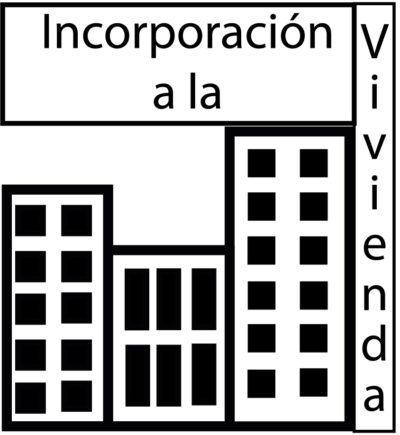
El proceso de salida de los usuarios que han logrado integrar hábitos de vida independientes se desarrolla siguiendo un modelo de intervención progresiva, orientado a facilitar la transición del recurso hacia una vivienda independiente. Este proceso permite:
Preparar al usuario para enfrentar nuevas circunstancias.
Adaptarse progresivamente a la nueva situación, evaluando necesidades y posibles dificultades.
Mantener la continuidad de referencias técnicas y seguimiento, ya que, aunque el usuario se independice del recurso, conserva el derecho a recibir atención y apoyo por parte de los equipos de las Unidades de Salud Mental.